Hosting needed for Choral Fest Living Savior has been asked by MLHS to help host high school students attending Choral Fest. We are hosting 26 students Northland Lutheran High School and would be looking for approximately 13 families who would be willing to open their homes and provide lodging for students during the weekend.
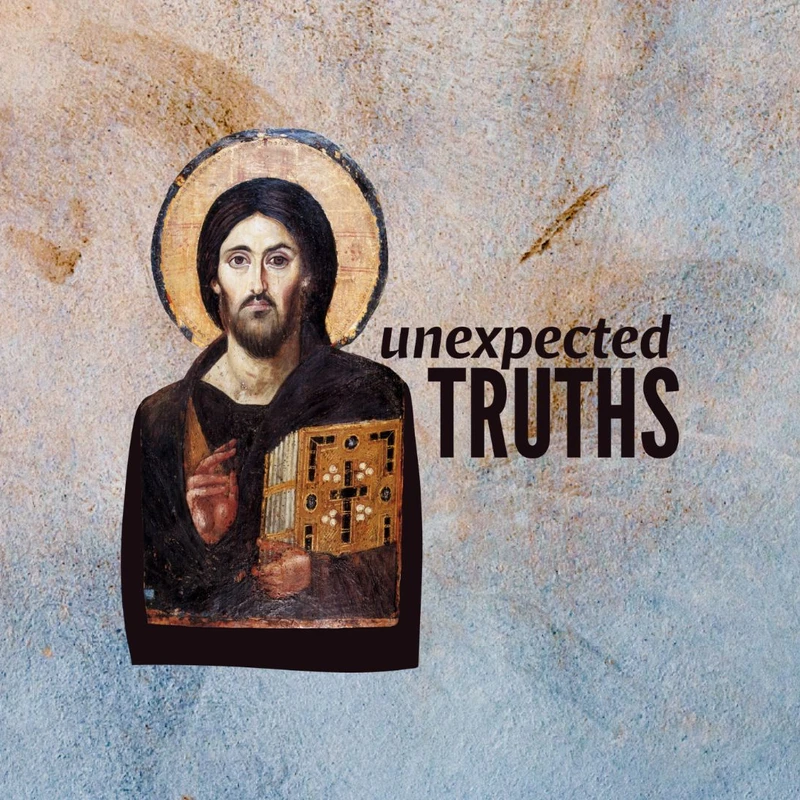
The Key Truth that Changes Everything (Matthew 16:13-20)
August 23, 2026
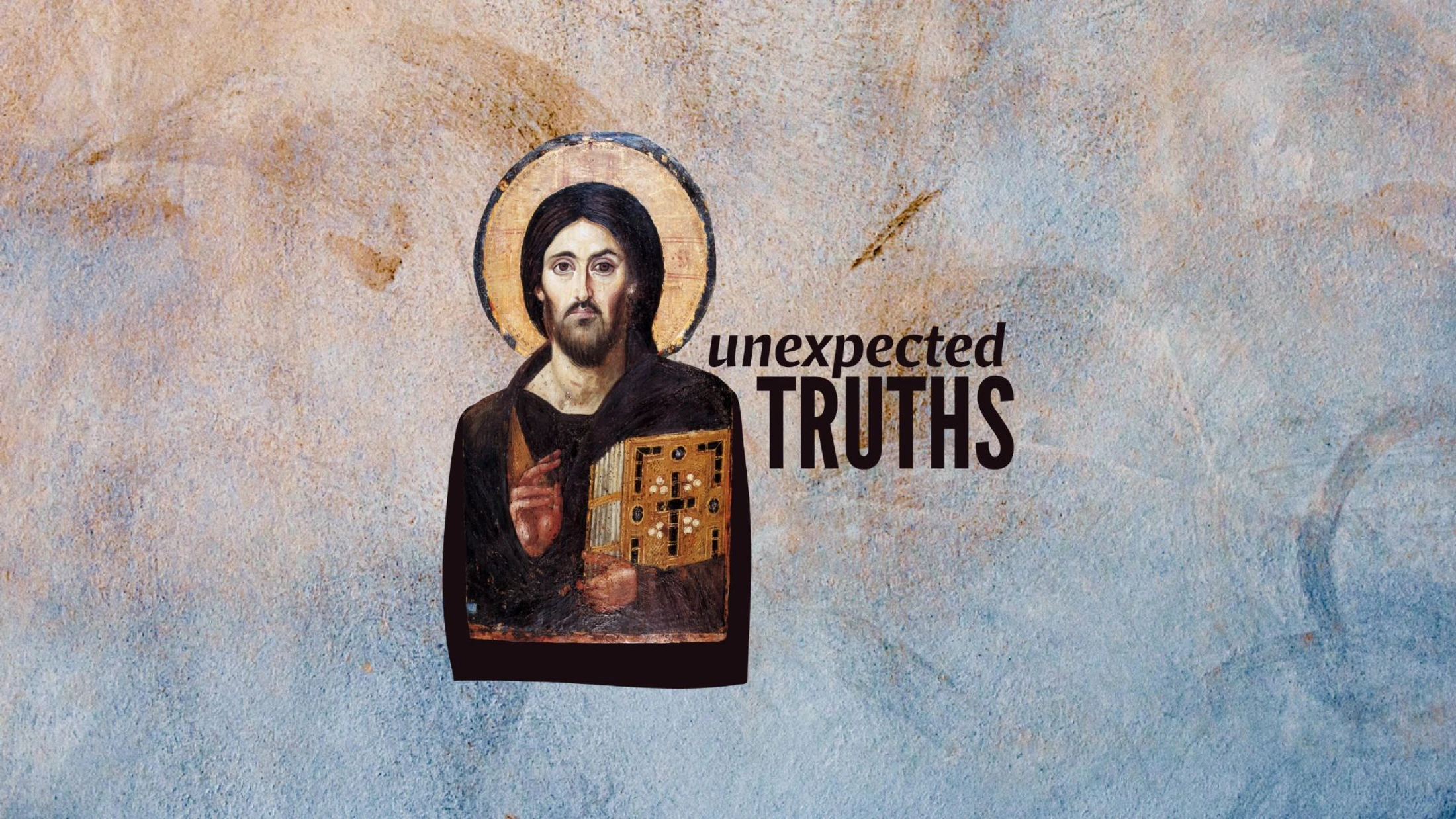
In this sermon based on Matthew 16:13-20, we explore the
life-changing question Jesus posed to His disciples in Caesarea Philippi: "Who
do you say I am?"
Discover how Peter’s bold confession—"You are the
Messiah, the Son of the living God"—serves as the foundational truth
for the Christian faith, opening the doors of heaven and guiding our mission to
proclaim forgiveness and hope to the world.
Messiah, the Son of the living God"—serves as the foundational truth
for the Christian faith, opening the doors of heaven and guiding our mission to
proclaim forgiveness and hope to the world.
Grace and peace to you from God our Father and from Jesus Christ, our Lord:
As school is going to start soon, we think about many of the things that we are taught and trained to do. We think about tests. What most tests are is a list of a bunch of questions where you are trained to give an answer. Having the right answer is important. Having the truth can change lots of things. But is it all about the answer?
In our world today, we really like to get our ideas across. We like to share our opinion. If it’s social media, where you have to share your opinion and prove those people wrong, or share your thoughts about whatever it is, from movies to politics to a color of something, to what something looks like, who knows, but it’s all about sharing your opinion. Is it more powerful to ask questions that can bring out key truths?
Think about some of the most important questions or the most famous questions that have been asked in your lifetime or in history. In our pastor coaching program, Crosstrain, we read books each month. A book we read recently was called The Art of Asking Better Questions. When you ask questions, there are more things that come out of it and you can get to the heart of things. You can bring more out and you can engage with people. Think about some of the big questions that people ask, or daily. People will say “How are you doing?” How do you respond to that? The author gives an example where, instead of just saying “How’s it going? How are you doing?” he said, “What brought you joy this week?” When he asked that question, the person kind of broke down because he had lost some loved ones recently and he was actually sapped of a lot of joy, but that helped him share instead of just “How’s it going?” Asking some deeper questions is really helpful.
Think about some of those famous questions. President John F. Kennedy in 1961 asked one of the most famous questions by saying “Ask not what your country can do for you but what you can do for your country.” The author of the book says, “The shift in question casts a vision for what a unified and others-oriented nation could look like instead of focusing on ourselves and focusing outwardly. It said what can we do as a united nation?”
One of the other important questions the author lists is from the 16th-Century Spanish Saint Teresa of Avila, who wrote "When one reaches the highest degree of human maturity, one has only one question left: 'How can I be helpful?'" There is also Dr. Martin Luther King, Jr. who said, “Life’s most persistent and urgent question is: ‘What are you doing for others?’”
These are some pretty important questions that we are not always asking ourselves, but the author asks this question as well: “Have you ever paid much attention to the questions that you ask? Have you considered why you ask questions at all?” The questions we ask often reveal the values we hold. The questions we ask determine the life we live. And consider some of the most important questions you’ve ever been asked. What is important to me? What is true and good and beautiful? What job should you accept? Will you accept the job? Will you marry me? These are all super important questions that need to be asked and are foundational. But in that list there are a couple other questions. You’ll maybe see why they relate to our sermon.
Some of the other questions listed as important questions are: What will I do with my life? Who am I? Will you follow me? Do you trust me? When you think about those very important questions, maybe then we see here how Jesus knows how to ask the right questions. Some questions matter more. We can ask so many questions in our lives. What is the weather like? How is it going? But some questions matter more. They dig down and they get to the key truth. They open up to see what people believe and think and they engage to get to the heart of it. So some questions matter more.
We know this is what Jesus did all the time. Jesus is known for asking hundreds of questions. When people come to Him and ask a question, more often, what does He do? Instead of giving an answer, He asks them a question. So here, as Jesus is asking a question that really matters, a question about who He is, we see why and why He might do it where He is. It says: When Jesus came to the region of Caesarea Philippi, he asked his disciples, “Who do people say the Son of Man is?” The context for this is a little important.
Why didn’t He ask this question as they were walking through the streets of Jerusalem and were in Capernaum? I had the pleasure to go to Israel when I was in the seminary. Caesarea Philippi is kind of in the north and the ruins are there of all these temples. Caesarea Philippi was known for its pagan worship and there was this row where there was temple after temple after temple to false gods. If you’ve seen The Chosen, they actually do this scene pretty well where they show Jesus in front of these temples and He asks this very question. As there are all these views about God and faith, He is standing there and He asks His disciples, “Who do people say the Son of Man is? And what about you, who do you say I am?” They gave many different answers that people had said. “Some say John the Baptist; others say Elijah; and still others, Jeremiah or one of the prophets.”
We know that many people had different ideas of who the Messiah was, who the Son of Man was, who the one was going to be, the chosen prophet, or the one who was going to save the people. Even though they had many ideas now, the truth of that hasn’t changed today about who Jesus is. There is one truth, but people have many different ideas about Him. “He was a good man.” “He did many miracles.” “He was such a wise teacher.” “He is very gentle.” “Jesus is just all about love.” Today, many liberal theologies say “Jesus fights for those who are oppressed. Jesus was fighting the power and the authority and leading a rebellion; leading to bring down power and stand up for those who were less important.” We know that there are many different thoughts about Jesus but here we see that Peter gives the answer of who Jesus is and it’s the key truth that changes everything. He says: “You are the Messiah, the Son of the living God.” Jesus replied, “Blessed are you, Simon son of Jonah, for this was not revealed to you by flesh and blood, but by my Father in heaven. And I tell you that you are Peter, and on this rock I will build my church, and the gates of Hades will not overcome it. I will give you the keys of the kingdom of heaven; whatever you bind on earth will be bound in heaven, and whatever you loose on earth will be loosed in heaven.” Then he ordered his disciples not to tell anyone that he was the Messiah.
So what is true about those who don’t know this truth that Jesus is the Messiah, the Son of the living God? Jesus tells His disciples and us that He gives us the keys of the kingdom of heaven. There will be something bound in earth and bound in heaven. Jesus is about love, but why would He talk about heaven being bound? Without the truth that Jesus is the Messiah, without this truth the door to heaven is locked. Why is that?
We heard it in Romans. As Paul talks about those who seek righteousness by the Law, they will live by the Law. Then you have to be a good person. Then you get to heaven by doing good. People like to put up their own thoughts of being good and what it looks like to be a good person. But they can’t live up to it. We’re all hypocrites that say “Do this and do that” and then we fail in our own ways. Even if someone is a really good person, they are still a sinner. They still have that name tag of “sinner.” They cannot get up to heaven, as Paul says in Romans. The door to heaven is locked by our own works. When we ask “Who am I?” we see that we are sinners who cannot save ourselves. There are so many people out there for whom this door to heaven is locked because they are trying to open it through the wrong key. They are trying to open it by their own ways and their own thoughts.
But what does Jesus say that is the key to opening that door? It’s this confession that Peter makes. “You are the Messiah, the Son of the living God.” God says that He will build His church on that confession, on this rock. And the gates of Hades cannot overcome it. Why? Why can the devil and hell not overcome the church and that confession is because of what Jesus brings. Jesus gives forgiveness and opens heaven. Whatever you loose on earth will be loosed in heaven. It is our joy and privilege as Christians to confess Christ, to confess Jesus, who came down to be our Savior and live for you and me because we cannot be perfect. We are selfish. We are hypocrites. So we need someone who is both man and God, one who walked around and preached and taught and did miracles to show that He had power over sin and diseases, but then to selflessly go to the cross even though He was innocent, to pay for your sins and my sins. So the gates of Hades cannot overcome it. The devil will confront you and say “Look what you did again. You’ve failed! You’re a sinner!” And we point to Jesus and say “No! I am forgiven. I am loved. I am redeemed.” It’s what we say in church in the Confession. After you receive that forgiveness, “I am loved and forgiven, a redeemed child of God.” Wear that as a name tag. Wear that as a badge and the gates of Hades will never overcome because this truth of Jesus being your Savior means everything.
As we cling to that truth, we know we need to confess that truth. We heard in Romans that we confess it in our hearts and we confess it with our mouth, that God gives us these keys. So then if the church is built on this confession and we have these keys, what does it look like for us to carry out that mission, that mission to go out and share the truth?
Maybe we ask: Why does Living Savior Church exist? Living Savior exists to proclaim the Living Savior. Where might that be? If we think about Caesarea Philippi and where Jesus is proclaiming this news, it’s in the midst of temple worship and in the midst of people who don’t know Jesus. You might first say “If we’re going to do that, I have to go to a foreign country where people are worshipping and they have incense or they are bowing down to these foreign gods.” Do you have to go far away to proclaim the Living Savior to people who don’t know, who don’t have that key to heaven and instead have a locked door to heaven right now? I think if you look closer, you probably have some neighbors, some coworkers, who maybe have never opened the Bible. Or maybe because of confusion or something that was said, they have shut that Bible and put it away and now they are worshipping something different. Everyone worships something and if they’re not worshipping Jesus, they don’t have the key to heaven. You can think about the cousin or the friend or the relative who is so steeped in sins, is struggling with doubt and fear, and they don’t have the peace of Jesus. Maybe it’s because of an addiction to alcohol or pornography or if it’s a struggle with thinking that their sin is too big, so how could they be forgiven. They need that key. So when you think about standing at the gates of Caesarea Philippi and the temple, they’re not far away. They are all around us and it’s our joy, as a church called together to be Living Savior, to proclaim the Living Savior to those who have not heard it.
But there are things that can get in the way of that. The times that we struggle to focus on the right thing. In this section of Matthew, Jesus really lays out what the mission of the church is: to be built on the truth of Jesus, to proclaim the forgiveness of sins, to go forward and to share this message. When might we use that binding key? As we start up the Barnabas ministry again, as there are people who haven’t been to church for 7-10 years and we say “Are you opening your Bible? Do you know your Savior?” and if they aren’t, we have to share the truth that without Jesus, the door to heaven is locked. Not as a judgment but out of love because we want them to have the key and to be refreshed with the Gospel. So that’s a time when we might share the key and someone might say we’re being judgmental. No, we’re showing love. We are doing the exact mission that Jesus gives here of being focused on that confession and using the keys.
Think back to the first question that we asked at the beginning of the sermon. “Ask not what your country can do for you but what you can do for your country.” Or what Teresa of Avila had said, “How can I be helpful?” Or what Dr. Martin Luther King, Jr. said, “What are you doing for others?” Aren’t these great questions? We all say “That’s so insightful.” But then when it comes to the church, do we ask those questions? What can I do for others? How can I be helpful? Ask not what your church can do for you but what you can do for your church. When we have a united mission to proclaim the Living Savior, it’s all about Jesus. We want to make it about Him, not so much about how I can be served and how I can make it about what I want. We have a privilege to make it about others so that so many people can know Jesus, the Living Savior. The hearts that are locked out are fearful and doubting but they can be secure that the gates of Hades will not overcome.
There are many questions we ask in the world, in our daily life, and I think we can ask more and more questions to dig down deep about our mission. I think for you, as a Christian, we can say there are many questions you can ask yourself about how you can help individually with those around you and to help the church proclaim this mission. Because there is really one key truth, one key truth that the church and Living Savior is all about—that Jesus is the Son of God, the Son of the Living God that brings salvation and peace, both now and forever. We want to profess that faith with our heart and with our mouth so that others may know that key truth. Amen.
And the peace of God, which transcends all understanding, will guard your hearts and your minds in Christ Jesus. (Philippians 4:7) Amen.